Websites in Catalonia
A business website in Catalonia: languages and legal requirements
What a company or freelancer's website in Catalonia needs: Catalan and Spanish, legal notice, cookies, privacy and accessibility. A practical summary with the rules cited.
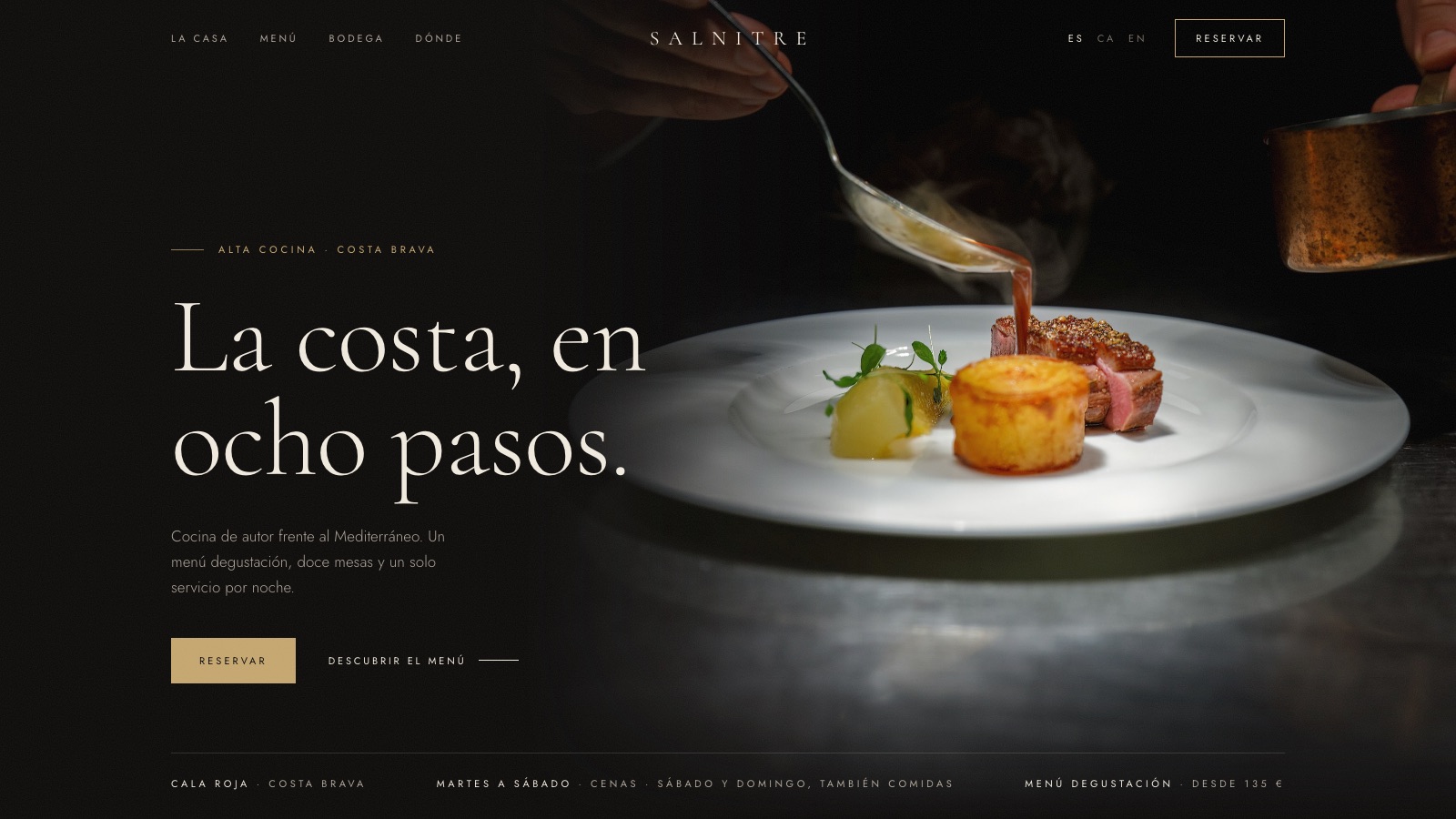
Technically, a website in Catalonia is no different from one in Madrid. What changes is the languages and a few details of consumer law. This summary gathers what to consider before publishing a website, online shop or app. It doesn't replace advice from a lawyer or your accountant, but it will help you ask the right questions.
1. Languages: Catalan and Spanish, not one or the other
Customer service in both languages. The Language Policy Act (Llei 1/1998, art. 32.1) requires businesses selling goods or services in Catalonia to be able to serve consumers who speak either of the two official languages.
Fixed information and documents. The same act (art. 32.3) requires fixed signage, general information notices and service-offer documents of establishments open to the public to be at least in Catalan. Registered trademarks and trade names are excluded.
Consumer rights. The Catalan Consumer Code (Llei 22/2010, art. 128-1) gives consumers the right to be served in the official language of their choice and to receive commercial information, contracts, quotes and invoices in Catalan. The Constitutional Court (STC 88/2017) upheld this article under a specific reading: the right to receive documents in Catalan cannot exclude Spanish.
And the website? We found no article that expressly says "the website must be in Catalan". But the website is where a company publishes its commercial information, prices and often its contracts. The Generalitat's guide for businesses recommends also using Catalan on the website, social networks and customer-service apps.
Our recommendation: a website in Catalan and Spanish, plus English if you work with tourism or foreign clients. Each language at its own address (e.g. /ca/, /es/, /en/) so Google shows each person the version in their language. That way you comply comfortably and reach more customers.
2. Legal notice: who is behind the website
The Information Society Services Act (LSSI, Ley 34/2002, art. 10) requires the following to be shown permanently, easily and free of charge:
- name or company name;
- address and email;
- tax ID (NIF);
- Companies Register details, if the company is registered;
- professional body and qualification, if the activity is a regulated profession;
- prices, stating whether taxes and shipping are included, if you sell goods or services.
This usually goes on a "Legal notice" page linked from the footer of every page.
3. Cookies: consent before tracking
Cookies that are not strictly necessary for the site to work (analytics, advertising, social media) require informed consent (LSSI, art. 22.2). Under the Spanish Data Protection Agency's guide as updated in 2023, the button to reject them must be in the first layer of the notice, at the same level as the accept button.
The simplest way to comply is not to use cookies you don't need. Our own website, for example, uses no cookies and shows no consent banner; visits are measured with a tool that sets no cookies.
4. Privacy
If the website collects personal data (a contact form, bookings, a shop), it needs a privacy policy explaining who processes the data, why, for how long and how to exercise one's rights, under the GDPR and the Spanish law that implements it (LOPDGDD). The less data you ask for, the easier it is to comply.
5. Accessibility: mandatory for many online shops since 2025
Ley 11/2023, which transposes the European Accessibility Act, includes e-commerce and websites and apps used to provide services to consumers. It applies from 28 June 2025. Article 3.3 exempts microenterprises providing services (under the EU definition, fewer than 10 employees and up to €2 million turnover or balance sheet); those selling products are not necessarily.
Even if your company is exempt, an accessible website — readable text, sufficient contrast, keyboard navigation, described images — works better for everyone and is easier for Google to understand.
6. Your own domain: .cat, .es or .com?
The .cat domain is intended for the Catalan linguistic and cultural community: registering it means declaring that link, and the registry may refuse or cancel the domain if it isn't met. For a local business in Catalonia it's a natural choice; to sell across Spain or abroad, .es or .com are usually more recognisable. What matters is choosing one, using it everywhere and renewing it on time.
Quick checklist before going live
- Catalan and Spanish (and English for foreign customers), each language at its own address.
- Legal notice with name, tax ID, address and email.
- No unnecessary cookies; if there are any, a notice with "Reject" in the first layer.
- Privacy policy if there are forms or a shop.
- Accessibility reviewed, especially if you sell online.
- Prices with VAT stated.
Planning a new website or want to check yours? We build websites in Catalan, Spanish and English from Girona. → Web design
*Sources: Llei 1/1998 on language policy (arts. 32 and 34); Llei 22/2010, Catalan Consumer Code (art. 128-1); Constitutional Court ruling STC 88/2017; Ley 34/2002 (LSSI, arts. 10 and 22); AEPD cookie guide (2023); Ley 11/2023 on accessibility (arts. 2.2 and 3.3); .cat domain rules (domini.cat). Reviewed 23 October 2026. This article is for information only and is not legal advice.*