Garden and renovation projects
Gardens and wildfire prevention in Catalonia: the 25-metre strip
What Catalan law 5/2003 requires of houses and housing estates near woodland: the 25-metre protection strip, the plots inside it and the private roads, who has to do it and how to take it into account when designing the garden.
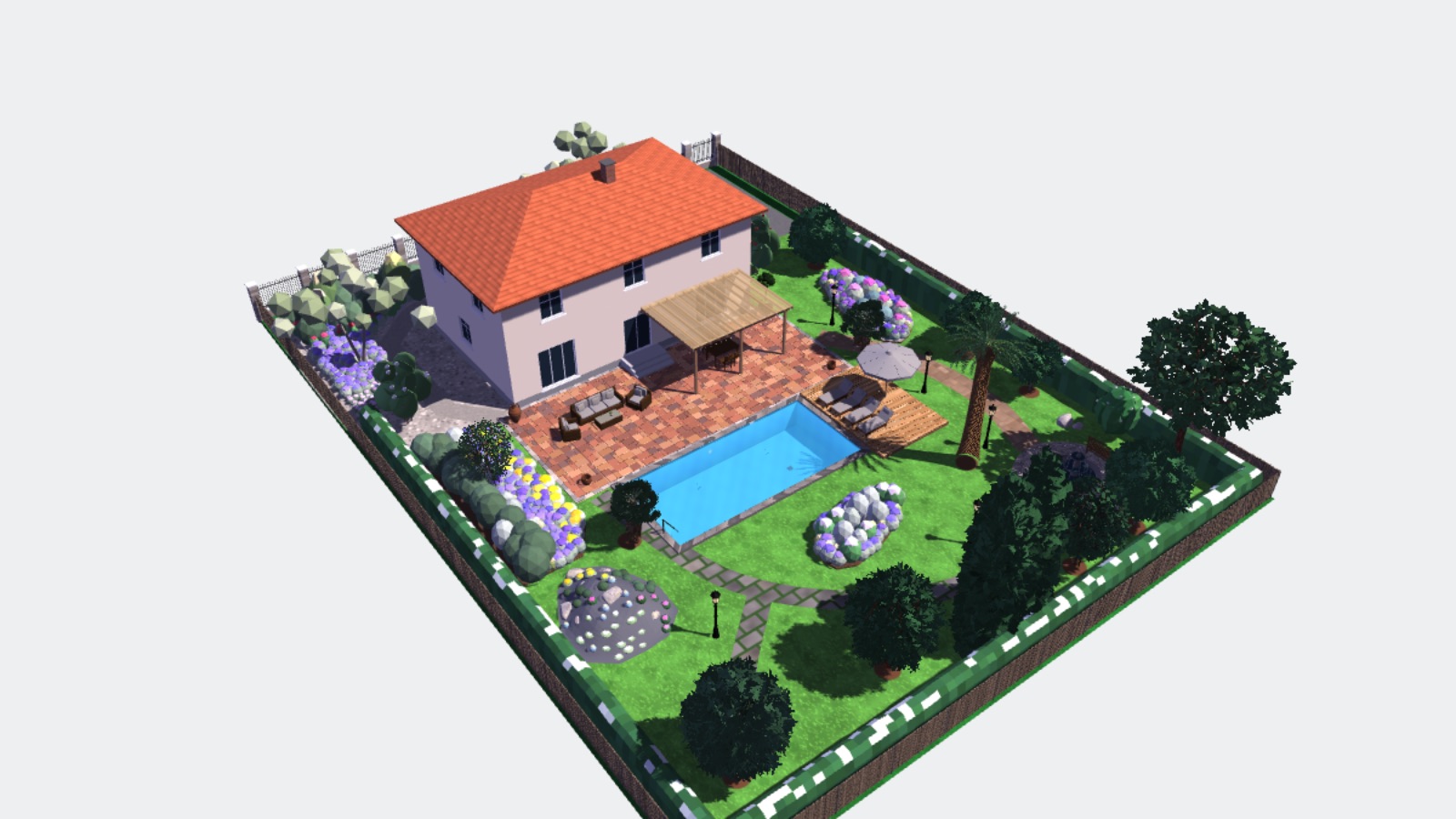
Many houses around Girona, in the Maresme or in the Vallès stand on a housing estate surrounded by woodland. There the garden is not only a place to be outside: it is also the zone between the house and the forest. In Catalonia a law has covered this since 2003, and it is worth knowing before you plant a hedge or design a new garden.
This article sums up what the rules say and how we take them into account in a garden project. It does not replace your municipality’s plan: the exact measures for your plot are set by the town hall.
1. Does the law apply to you?
Catalan law 5/2003 of 22 April on wildfire prevention measures (Llei 5/2003), amended by law 2/2014 of 27 January, applies to housing estates, settlements, buildings and installations located on forest land or less than 500 metres from forest land.
Each town hall approves a delimitation map showing the areas affected. It is the first thing to check: if your house or your estate is on it, the obligations in this article apply to you.
2. What it requires
The law asks three things of the owners of the estates, settlements, buildings and installations affected:
- To ensure an outer protection strip at least 25 metres wide all around, free of dry vegetation and with the trees thinned.
- To keep all plots and green areas inside the strip in the same condition as the strip.
- To keep private roads, both internal and access roads, and their verges clear of dry vegetation.
Green areas, streets, fields and car parks count as part of the strip. If the strip crosses land belonging to someone else, the obliged owner must ask for permission, and the law states that it has to be granted.
3. Who does it and who pays
The strip is made and paid for by whoever benefits from the protection: the estate’s owners’ association or, if there is none, each owner. If several isolated houses share a strip, such as a group of farmhouses, the owners have to agree between them.
The town hall notifies those obliged, inspects and, if the work is not done, carries it out itself and charges the cost to the owners. The provincial council and the county councils help town halls to make the strips.
4. What the strip has to be like
The technical conditions are in Catalan decree 123/2005 (Decret 123/2005), which implements the law. Official summaries explain them like this:
- Break the continuity of fuel: fire must not be able to pass from plant to plant or from the ground to the crowns.
- Trees spaced apart and pruned from below.
- Clean undergrowth.
- Isolated shrubs, at least 3 metres apart.
- Priority to low-flammability species, from the list in annex 2 of the decree.
The exact distances between trunks and the pruning height are applied according to the decree and your municipality’s plan. Ask at the town hall before cutting or planting.
5. How we take it into account when designing a garden
In a garden project on an affected plot, fire prevention is a starting point, like the slope or the sun:
- We draw the strip and the delimitation map on the plot in 3D, to see which part of the garden falls inside it and what it requires.
- We keep the crowns of new trees apart and avoid continuous masses of vegetation linking the woodland to the house.
- We choose plants from the decree’s list of low-flammability species and place them in isolated groups, not in continuous hedges.
- Next to the house we propose surfaces that do not burn: paving, gravel, irrigated areas and paths, which also serve as access.
- Maintenance: the planting plan states what is pruned, what is cleared and how often, because the strip has to be maintained every year.
The 3D model shows the garden as it will be after a few years, with the trees grown: that is when the crowns start to touch and when the strip stops complying if it has not been planned.

Our Mediterranean garden is a demonstration project: it is not in a forest area, but it shows how plants, paving and seating areas are represented in 3D.
What to have before you start
- Your municipality’s delimitation map and whether your plot is inside it.
- The width and route of the strip around the house or estate.
- The list of existing trees and shrubs, with their positions.
- New species chosen from the list in annex 2 of decree 123/2005.
- An annual maintenance plan.
More terms are explained in the glossary and there are examples in Gardens and parks. If your house is near woodland and you want to design the garden, write to us and we will look at it together.
Sources: Catalan law 5/2003 of 22 April on wildfire prevention measures in housing estates, settlements, buildings and installations on forest land, amended by law 2/2014 of 27 January; decree 123/2005; Diputació de Girona presentation on applying law 5/2003 (2016).