Garden and renovation projects
Natural lawn, artificial grass or no lawn: what suits a Mediterranean garden
We compare natural lawn, artificial grass, ground cover plants and a gravel garden for a garden in Catalonia: water, heat, upkeep, use and construction. With a table to help you decide and 3D examples.
Almost every garden we design starts with the same question: do we put in a lawn? In a climate with long dry summers and droughts that come more and more often, the answer is no longer automatic. There are four reasonable routes, and each is good for something different.
The useful question is not which surface is best, but what will happen on it: children playing ball, a dog, somewhere to lie down by the pool, or simply something green to look at from the terrace.
1. Natural lawn: the most pleasant, and the thirstiest
Nothing replaces walking on real grass: it is cool in summer, it soaks up the rain and it stands up to play. In return, it is the surface of the garden that asks for the most water and the most work.
On the coast and inland in Catalonia it helps to tell two families apart:
- Cool-season grasses (fescues, ryegrass, meadow grass). They stay green almost all year, but in July and August they need frequent watering and suffer in the heat.
- Warm-season grasses (Bermuda grass, zoysia, paspalum). They cope much better with heat and need less water in summer, but in winter they go dormant and turn straw-coloured until spring.
If you choose natural lawn, put it in one defined area rather than across the whole garden: where it will really be used, in full sun or light shade, and on its own irrigation zone. It needs a good layer of topsoil underneath; our gravel and soil calculator gives you the cubic metres for your area.
During droughts, local councils and the Catalan Water Agency can restrict garden watering. Before you decide, check which phase applies in your municipality: a lawn that cannot be watered in summer is lost.
2. Artificial grass: always green, but not a garden
Artificial grass needs no watering to grow, no mowing, and looks the same in January as in August. That is why it is so common on terraces, roof terraces and small patios where real grass would not thrive.
What to know before choosing it:
- It gets very hot in the sun. In high summer it can burn bare feet and it does not cool the air the way grass does. Next to a south-facing pool it is a poor combination.
- It is not zero maintenance. It needs brushing, leaves have to be cleared and, with dogs, it has to be rinsed.
- It needs a well-built base. A compacted sub-base with a fall, so that rainwater drains through instead of pooling. A badly built base shows within a few months.
- It has a limited life and at the end it is plastic waste that has to be removed.
It makes sense on small areas, in deep shade or on a concrete slab. As the answer for a whole garden, it usually turns out worse than it looks in the catalogue.
3. Ground cover: green you walk on only now and then
Between lawn and gravel there are low plants that cover the ground and need far less water once established: creeping thymes, prostrate rosemary, low grasses and other drought-tolerant species used as a meadow.
They will not survive a football match, but they do take occasional footsteps, especially with stepping stones. They are ideal for banks, edges, areas that are looked at more than walked on, and around trees. In our Mediterranean plant selector you can filter ground cover plants by sun and water.
4. A gravel garden with Mediterranean plants
The option with the least water is a dry garden: gravel or fine gravel over a membrane, with beds of aromatic herbs, grasses and Mediterranean shrubs. Well designed, it is not a lot full of stones: it has volumes, flowering and paths.
Gravel lets rainwater into the ground, which helps any plot that suffers from puddles; we explain this in the article on rainwater in the garden. For the depth and volume of gravel, use the calculator.
A table to help you decide
- Children and play: natural lawn, in a defined area.
- Dogs: a hard-wearing natural lawn, or gravel with patches of ground cover; artificial grass needs frequent rinsing.
- Terrace, roof terrace or shady patio: artificial grass or decking; grass does not thrive without sun or soil.
- Slope or bank: ground cover and shrubs; lawn on a slope is hard to mow and to water. We cover this in the guide to sloping garden design.
- Second home: gravel and Mediterranean plants on drip irrigation; nobody has to be there to mow.
- Next to the house in a wooded area: first read our guide to garden wildfire protection, which explains what suits the strip around the house.
Mixing is usually the best answer
In most gardens you do not have to pick a single surface. A lawn where people play, ground cover along the edges, gravel on the paths and Mediterranean beds where the garden is there to be looked at. That way the water goes where it is needed.
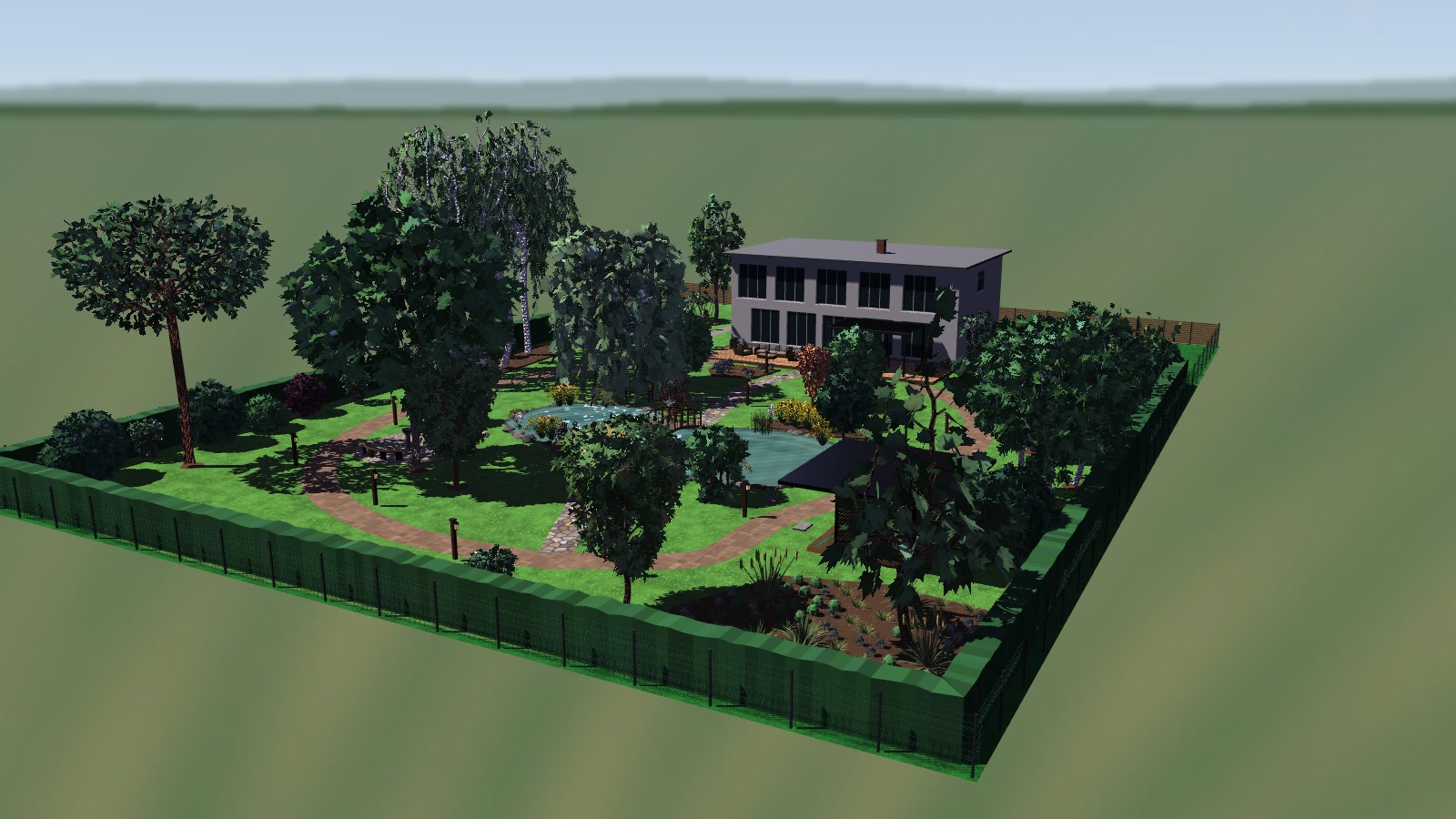
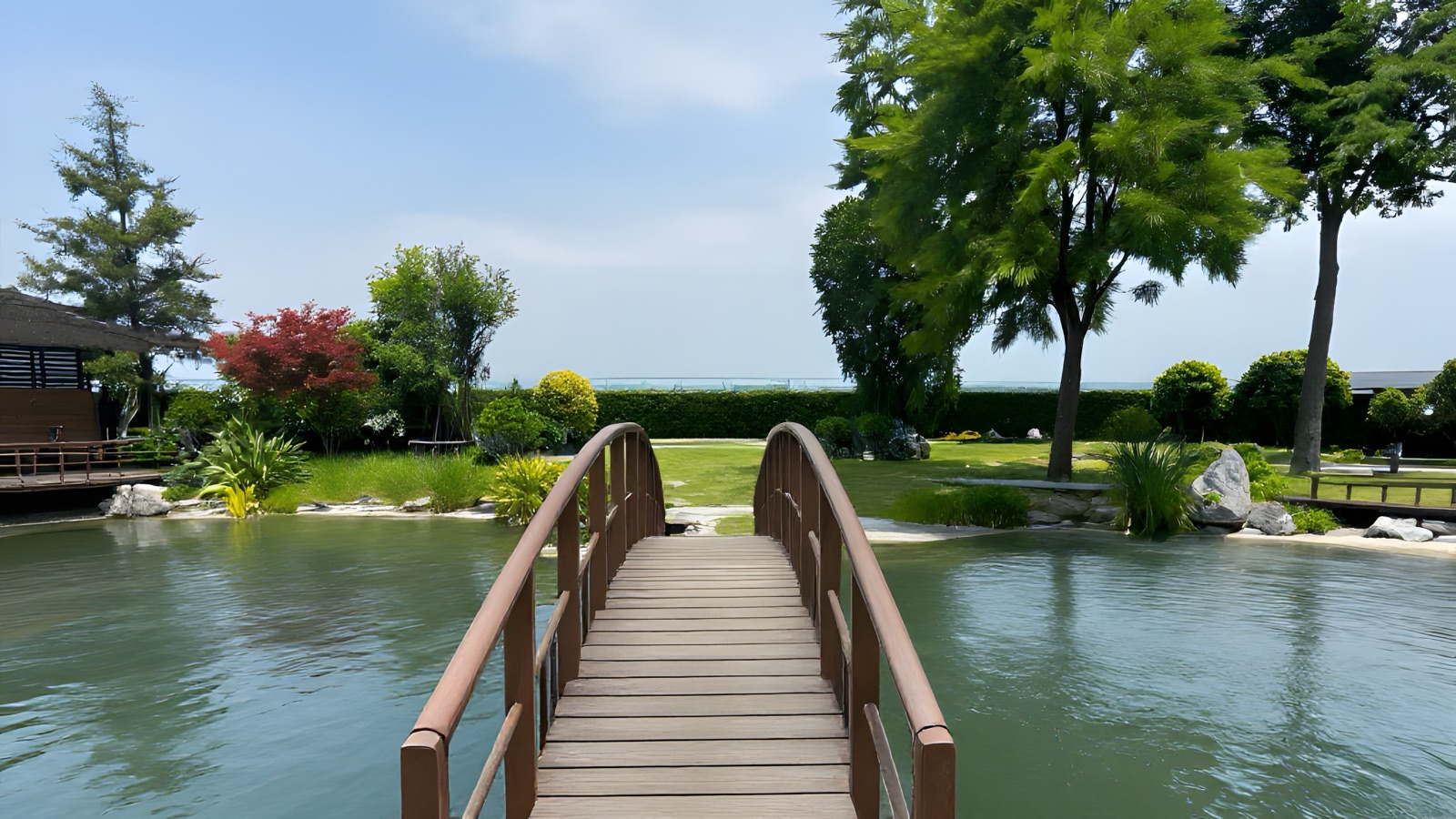
This is what we do in our 3D demonstration projects: in the garden with a pond you walk at eye level and see how grass, stone paths and planted beds sit together. Seeing the garden in 3D before construction helps you decide how much lawn you really need.
If you would like to draw your plot and try where each surface would go, you can do it for free in our plan editor. And if you would rather look at it together, write to us: we will propose the layout of your garden in 3D, with its quantities.